Our Breeding Philosophy
Light Birthweight & Calving Ease
We believe transparency matters, so we want to share our approach to light birthweight and calving ease.
“Calving ease” is a term used frequently in this industry, but we believe it deserves a closer look. Many bulls marketed as calving-ease are generally shorter gestation, which will result in lower birthweights. While these bulls may post impressive CED and BW numbers on paper, we do not believe numbers alone define true calving ease.
In our experience, structure and length are equally important. A bull with an Angus-type head, good neck extension, a smooth shoulder, and added body length is more likely to sire long-made calves that are born easily. For our mature cows, extremely light calves do not make sense. These calves tend to chill easier, lack vigor, and can ultimately cost pounds at weaning. We are also cautious of stacking multiple generations of short-gestation genetics, which can lead to reduced bone, decreased pelvic size in females, and foot issues as the cattle mature.
We know our cow herd well. When we state that a bull can be considered for use on heifers, we stand behind it. In a business where pounds generate dollars, we believe it’s important not to start 20 pounds behind at birth.
Functional - Maternal - Performance
-
Functional
Nothing is better at converting grass into protein than the Angus cow – that's what they were made to do! A cow must do this efficiently or she is costing the producer money. The ability to maintain her body condition, while raising a big, stout calf, and breeding back on time, is what we believe a functional cow is. The hard, short grass and drastic temperature swings in our northern climate are a real test for these cattle. Another must-have is proper foot and leg structure. We are not going to try to tell you that every cow we have has picture perfect feet, but we are trying our best to select and market cattle with good feet. There's no compromise here. If they aren't good, they leave!
-
Maternal
A cow should have the natural maternal instincts to get her calf moving and nursing soon after birth. We also believe this includes having an udder that is properly structured so that the calf can nurse without assistance. Milking ability is good to a point, but it becomes undesirable when a calf needs help to attach and nurse. This is important to us because we do not have extra manpower to babysit every cow, especially when it's terribly cold. We also require our cows to have a temperament that is safe, not only for the cow and her calf, but especially us while we are processing the calves.
-
Performance
Commercial producers sell their cattle by the pound, and we expect our genetics to add extra pounds to their calf crop. Being transparent in providing the ratios of each cow and calf is important, so that our customers know how they rank within their contemporary group. We don’t believe the continual stacking of light birth weight genetics is necessary for every bull. Studies have shown that a calf will double its weight in the first 5 weeks of its life. So a 60 lb calf vs a 85 lb calf at birth is already a 50lb difference when 5 weeks old. We don't think you will gain that weight back by fall. Quality genetics increase your bottom line!
About the Foss family
Pleasant Valley Angus is owned and operated by Cory and Sarah Foss, along with their kids, Addison and Hazen, and Cory’s parents, Jerry and Judy. Cory is the third generation to run cattle on the ranch, which headquarters six miles west of Sidney, MT. Foss’ started AI’ing extensively in the 90s on their commercial cattle as well as doing custom AI’ing for friends and neighbors. Cory and Sarah added registered females in 2008 and that portion of the herd has steadily grown since then.


About Pleasant Valley Angus
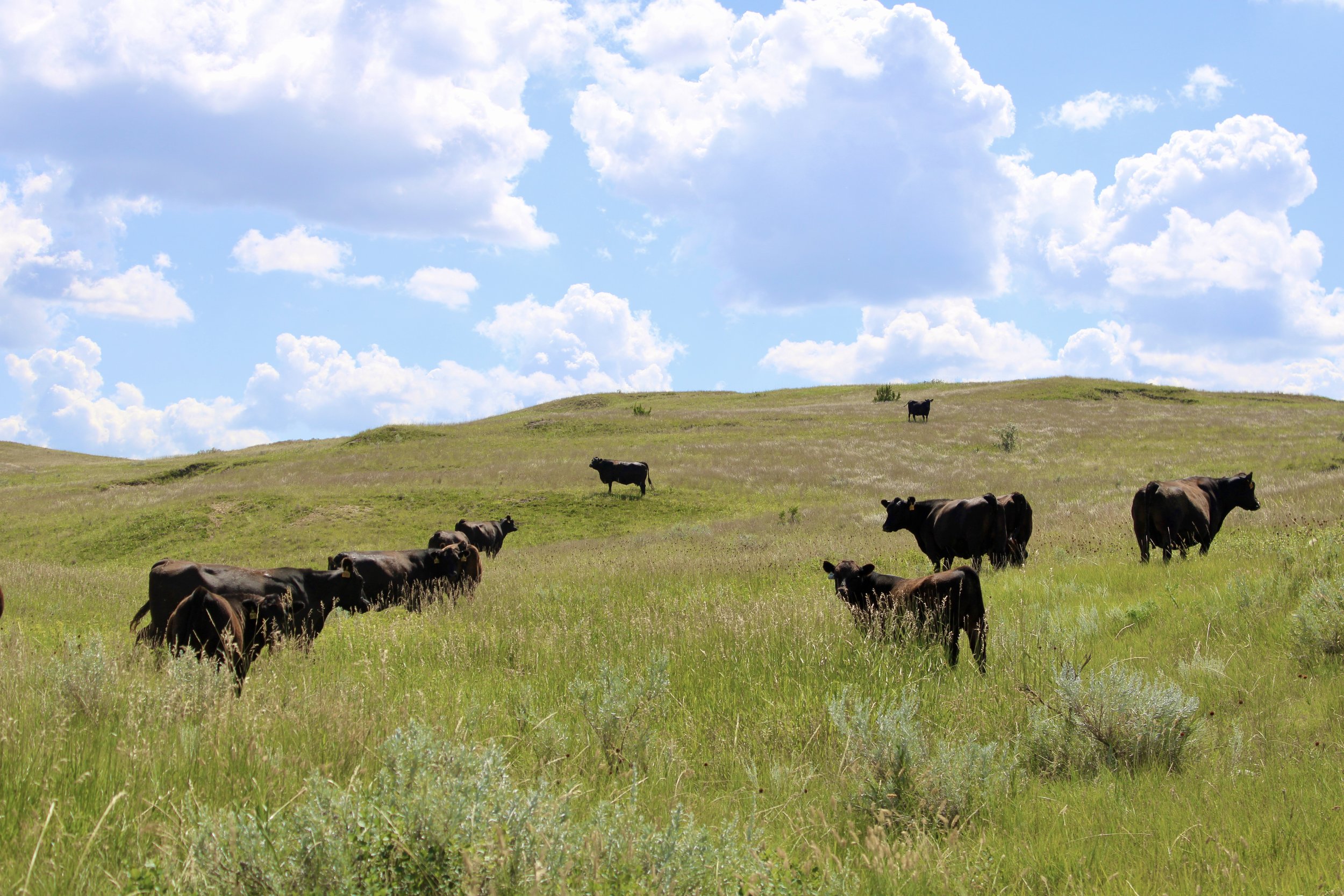
Currently we market a select group of yearling bulls and heifers in the spring. Our goal is to raise an elite set of females that produce powerful, functional, maternally-based cattle. The cow herd is run on native grass and salt/mineral as long as the weather allows. The cows are brought back home for the winter and spring months, where the calving and AI’ing take place. We require our cows to be structurally sound, fertile, easy fleshing with good feet, udder and disposition.
We try to breed cattle that hold up to the extremes this country throws at us. If they can’t breed back, hold their condition, and have good feet, all while raising a quality calf, then they leave; no second chances. We feel these kinds of genetics are what will keep not only us, but most importantly our customers, in the cattle business; it’s not something we take lightly. After all, this isn’t just a cattle business, it’s a people business.
We are surrounded by some of the best family, friends and neighbors anyone could hope for and we feel very blessed to live where we do and raise our kids here.
